
Review · JAPAN
Samurai Guide Sho’s:Kichijoji Night Training–Drink & Dish Pairing
Tokyo after dark has many moods. This one favors quiet conversation, small bars, and thoughtful food pairings over loud drinking. Samurai Guide Sho leads a maximum of five people through Kichijoji, beginning at Harmonica Yokocho and ending with seasonal sushi.
I especially like the reserved seating in the yokocho and the unusual chance to choose your own drink for each dish. The guide’s indigo haori adds character without turning the evening into a costume show. The main drawback is clear: drinks are not included, and this is not the cheapest way to drink in Tokyo.
The night at a glance
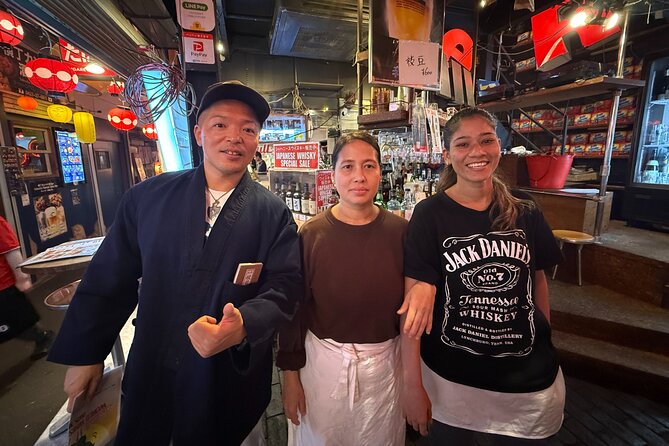
- Three stops in about three hours: Start with a yakitori bar, continue to a Japanese craft beer bar, and finish with sushi.
- A five-person maximum: The small size gives the evening a personal feel and makes conversation easier.
- Pairing, not drinking contests: You choose the drink that best suits each dish, with Sho offering quiet guidance when needed.
- Harmonica Yokocho as your opening scene: Reserved seats let you enjoy the narrow alley without worrying about finding a place at the first stop.
- Drinks cost extra: Plan on about ¥1,000 per drink, with cards accepted at the bars.
- A local-night approach: Venues and routes can change with crowd conditions and the mood of the evening.
Meeting Samurai Guide Sho at Kichijoji Station
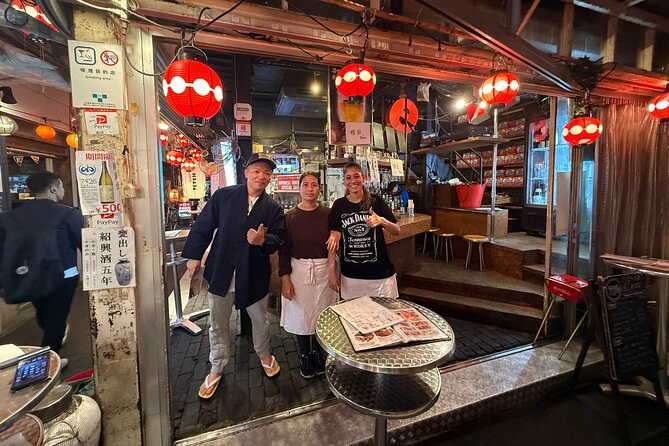
The meeting point is in front of Baskin-Robbins at the north exit of JR Kichijoji Station. The tour starts at 5:30 p.m., a useful time for watching Kichijoji shift from late afternoon into its evening rhythm.
Sho wears an indigo haori jacket. It is a simple visual marker, not a theatrical costume. His modern Samurai idea is tied to ichi-go ichi-e, the Japanese notion of treating each encounter as special. You will not be asked to pose for a performance or follow a scripted show. Instead, Sho acts as a drinking companion who helps you settle into the night.
Communication uses simple English and translation tools when needed. That means you should not expect long cultural lectures or detailed explanations at every turn. If you prefer a guide who gives a constant stream of facts, this may feel too quiet. If you like natural conversation, pauses, and a less formal style, the approach makes sense.
The group can include up to five people, so you may share the evening with other participants. That small size matters in Kichijoji, where many bars have limited seating and a large group would quickly feel out of place.
More Evening Tours in Japan:
- Osaka Bar Hopping Night Walking Tour in Namba (3 bars, 6 tastes)
★ 5.0 · 958 reviews - Kyoto Bar Hopping Night Tour
★ 5.0 · 613 reviews - Hiroshima Izakaya Food and Drink Night Tour
★ 5.0 · 297 reviews
Harmonica Yokocho sets the tone
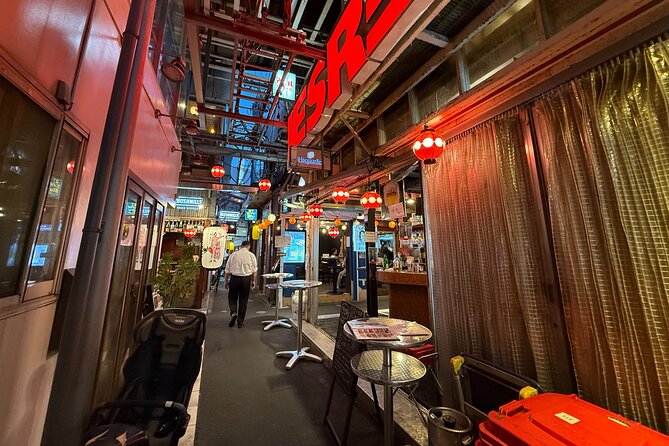
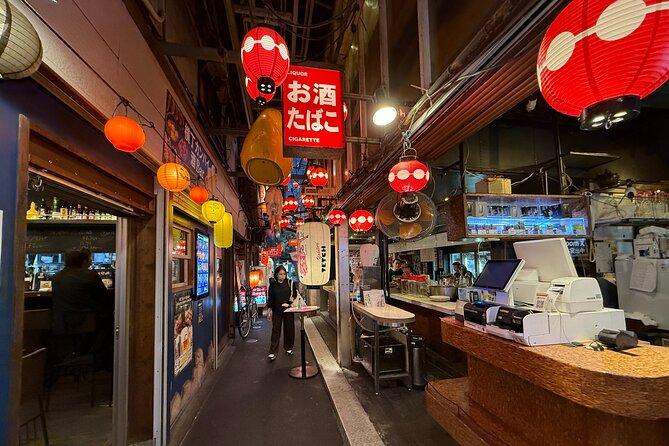
The first stop is a yakitori bar tucked inside Harmonica Yokocho, the narrow collection of alleyways near Kichijoji Station. Reserved seats are included, which is a real practical benefit. You can take in the retro alley atmosphere without beginning the night by searching for an open table.
This opening stop lasts about 50 minutes. Sho selects four or five local dishes, and the menu may include food prepared with seasonal ingredients and animal products. The point is not to order a large meal from a fixed menu. It is to taste several small dishes and think about what you would like to drink with each one.
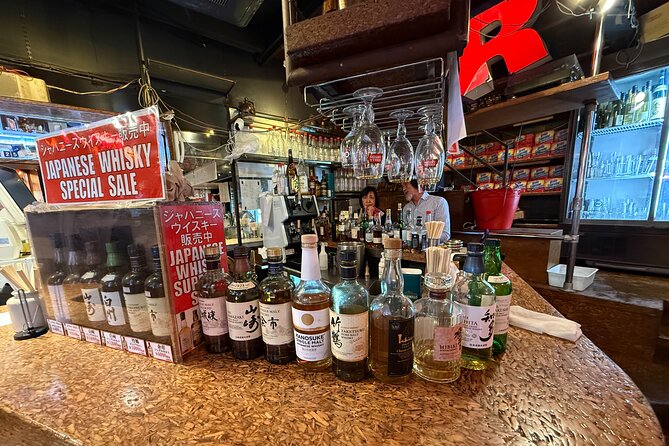
Sake, Japanese whisky, and other drinks may be available. Drinks are ordered separately, so you have room to choose according to your taste and budget. A useful strategy is to ask Sho for his pairing suggestion before ordering, then select the glass that sounds most appealing to you.
The food may not all be traditional yakitori. One meal can include Western-style dishes made with Japanese ingredients, giving you a better sense of how local bars mix familiar ideas with Japanese cooking. Menus change, so you should expect a seasonal experience rather than a guaranteed list of dishes.
Harmonica Yokocho is a strong choice for the first stop because the setting does much of the work. The close tables, small bars, and old-fashioned alleyways create a sense of place that a large restaurant cannot match. The tradeoff is that the setting may feel cramped or smoky to some people, although no specific smoking conditions are promised.
The Craft Beer Dojo brings more choice
The second stop moves to a craft beer bar, described as a dojo of fermentation. It lasts about 50 minutes and focuses on Japanese craft beer served on draft.
This is likely the most useful stop for anyone who wants variety. One bar has many taps, and the selection can include different Japanese craft beers with contrasting aromas and bitterness. The pairing exercise changes here: instead of asking only which sake fits a dish, you can think about how malt, bitterness, and aroma work with the food on the table.
The included food at this stop consists of one to four carefully selected dishes. Optional food can be ordered separately in small portions, and you can skip it if you prefer. Japanese craft gin, sake, and other drinks may also be available, so you are not forced to drink beer if it is not your favorite. A gin and tonic has been singled out as a particularly good choice by someone who enjoyed the experience.
Sho’s friendly relationship with the bar staff helps the stop feel relaxed. That detail matters because craft beer menus can be confusing when you do not recognize the breweries or styles. You can ask for help without turning the evening into a formal tasting class.
Still, keep your expectations in check. The tour offers pairing support, not a certified beer lesson. You may learn what you like through comparison, but you should not expect technical brewing instruction or a long explanation of every tap.
Sushi closes the evening quietly
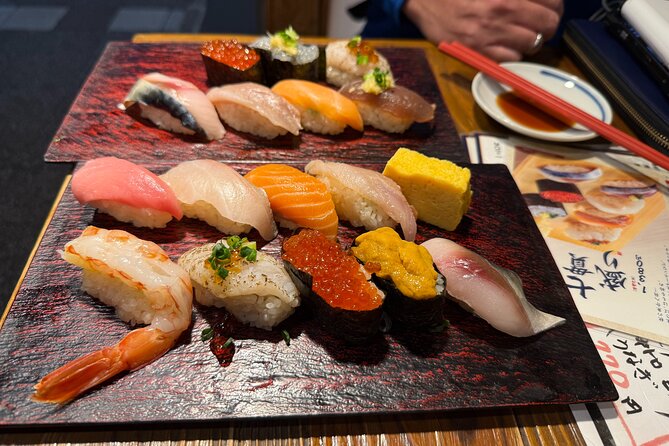
The final training ground is a sushi bar in Harmonica Yokocho. You receive a seasonal recommended sushi assortment, then select the sake you want to pair with it.
This is a calm finish after the more social energy of the craft beer stop. The attraction is the simple focus on sushi, sake, and the moment. If you enjoy taking your time with a meal instead of rushing from bar to bar, this last stop gives the evening a clear sense of purpose.
The sushi is seasonal, so the exact pieces are not fixed. You should come hungry. Food is served at all three stops, and the plan is for the combined dishes to provide a satisfying meal rather than a few token snacks.
The sushi course also shows the limits of the tour. You do not get to choose from a full sushi menu, and the selection depends on what the restaurant recommends. That is part of the appeal for people who like guidance, but less suitable if you have a very specific list of sushi preferences.
Dietary restrictions require careful thought. The food commonly includes seafood, animal products, seafood-based broth, and alcohol-based seasonings. Vegetarian, vegan, kosher, and halal diets cannot be accommodated. If you have allergies, tell the provider in advance, although accommodation is not guaranteed.
More Guided Nights Out in Japan:
- Osaka: Namba Pub Bar Crawl with a Local Guide
★ 4.9 · 424 reviews - Osaka: Guided Pub Crawl
★ 4.4 · 331 reviews - 3-Hour Tokyo Pub Crawl Nightlife Welcome Guided Tour in Shibuya
★ 5.0 · 209 reviews - 3Hour Osaka Pub Crawl Bar Hopping Nightlife Guided Tour in Namba
★ 5.0 · 122 reviews
Pairing is the real activity
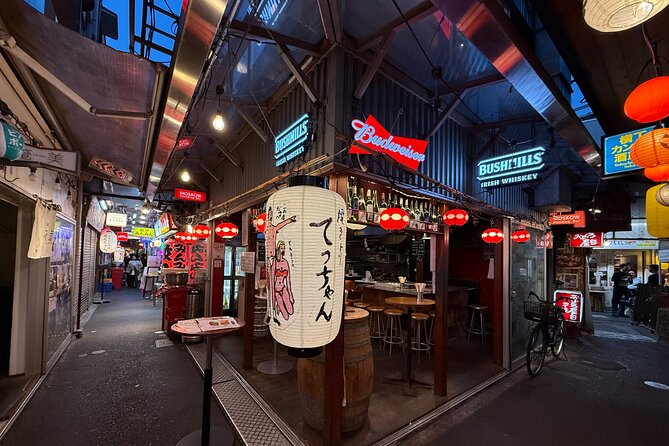
The central idea is simple: each bar serves food, you choose a drink, and you consider how the two work together. This is not an exam, and you do not need to know the difference between sake styles or Japanese beer regions.
Sho’s guidance is intentionally light. If you hesitate, he may offer a small hint, described as a secret word of guidance. That leaves room for your own taste. You might prefer a drink Sho would not choose, and that is fine. The point is to notice what you enjoy.
I like this format because it gives the night a shape beyond ordinary bar hopping. You are not collecting drinks or racing to the next address. You are paying attention to the food, the room, and the people at the table.
The format also requires a certain attitude. If you want all-you-can-drink pricing, loud group games, shots, or a tightly managed schedule, this experience will disappoint you. Routes and venues may change based on crowd conditions and the atmosphere at each place. That flexibility protects the local feel, but it also means you should accept some uncertainty.
What the price really covers
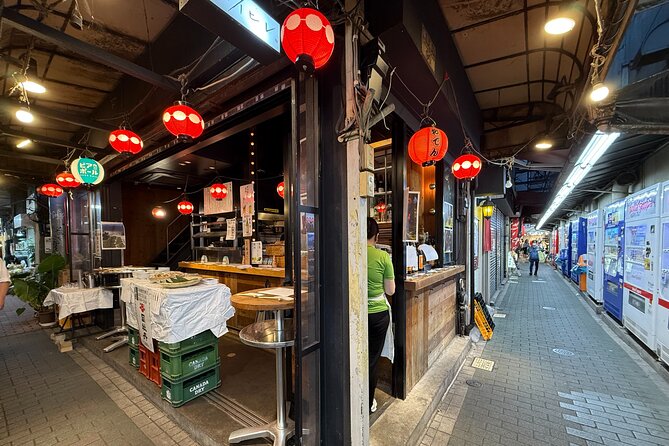
The listed price is $97.73 per person. That covers the guide, the small-group format, reserved seating at the first stop, selected food at three locations, and help with drink-and-dish pairing.
Your drinks are extra, at about ¥1,000 per drink. Optional food orders are also extra, although you can order small portions or skip them. Credit cards are accepted for drinks and optional food.
The value depends on what you are comparing it with. If you simply want the lowest-cost way to drink in Tokyo, this is not it. You could spend less by choosing your own bars and ordering only what you want.
You are paying for a different kind of convenience. Sho chooses the venues, arranges the first reserved seats, accompanies you between stops, and helps bridge the gap when menus or drink choices are unfamiliar. With a group of no more than five, the experience is closer to a hosted evening than a standard group excursion.
The price also buys some protection from common Tokyo-night frustrations: not knowing which narrow bar will welcome you, having to explain a menu through translation, or ending up at a place that does not suit your mood. That does not guarantee a perfect evening, but it has practical value.
Who will enjoy this Kichijoji night
I would recommend this experience to you if you:
- Prefer a small group to a large organized outing
- Like food and drinks in equal measure
- Want to see local bars without planning every stop yourself
- Enjoy quiet conversation and a slower pace
- Are open to seasonal dishes and changing menus
- Feel comfortable spending extra on drinks
It is especially suitable if you are traveling alone or with one other person and would enjoy meeting a few others in a relaxed setting. Sharing a table can be part of the evening, so you should not expect a private tour unless your own party fills the group.
You should probably skip it if you want extensive sightseeing commentary. The focus is food, drink, and atmosphere, not landmarks or a detailed history of Kichijoji.
You should also skip it if you dislike uncertainty. The guide may adjust the route or venue according to the night’s conditions. That is useful in a small-bar district, but it means the schedule is not as fixed as a museum tour.
Participants must be at least 20 years old, Japan’s legal drinking age. Comfortable shoes are sensible because the evening includes walking between stops. The activity returns to the original meeting point near Kichijoji Station.
My practical tips for a better evening
Arrive a few minutes early at the Baskin-Robbins meeting point. Kichijoji Station has several exits and busy pedestrian flows, so starting calmly is better than beginning the night while trying to find the group.
Eat lightly before you arrive, but do not arrive full. Food is served at each stop, and the final sushi course is meant to complete a substantial evening.
Bring a payment card and enough room in your budget for drinks. The advertised price does not include alcohol, and ordering freely can add up if you choose several glasses at each stop.
Tell Sho about allergies or dietary restrictions before the tour begins. The experience cannot accommodate vegetarian, vegan, kosher, or halal diets, and seafood-based ingredients are common.
Treat the haori as an introduction, not a promise of a stage show. Sho’s style is quiet and personal. The strongest moments are likely to come from the bars, the food, and the conversation rather than from formal entertainment.
Finally, do not judge the night by how many places you visit. Three stops may sound modest, but the purpose is to sit, eat, compare drinks, and notice the atmosphere. A faster itinerary would work against the whole idea.
Should you book Samurai Guide Sho’s Kichijoji night?
Book it if you want a carefully hosted evening built around Japanese food, local drinks, and small-bar atmosphere. The reserved seat in Harmonica Yokocho, the broad craft beer choice, and the sushi-and-sake finish give the experience a strong progression.
I would be less likely to recommend it to someone counting every yen, avoiding alcohol, or hoping for a lively bar crawl. For the right person, though, the $97.73 price pays for access, planning, and companionship rather than drink quantity. You come for a local night with a clear theme, not a checklist of bars.
FAQ
Where does the experience begin?
It begins in front of Baskin-Robbins at the north exit of JR Kichijoji Station, at 1-chōme-4-18 Kichijōji Honchō, Musashino, Tokyo.
What time does the tour start?
The start time is 5:30 p.m.
How long does the experience last?
The experience lasts approximately three hours and ends back at the meeting point.
How many people can join?
The maximum group size is five people.
Are drinks included in the price?
No. Drinks are ordered freely and paid for individually. They cost about ¥1,000 each, and credit cards are accepted.
Do I need expert knowledge about sake or beer?
No. The pairing activity is designed for people without specialist knowledge. Sho can offer guidance if you are unsure what to choose.
Can dietary restrictions be accommodated?
Allergies should be shared in advance, but vegetarian, vegan, kosher, and halal diets cannot be accommodated. Dishes commonly include animal products, seafood-based broth, and alcohol-based seasonings.
Just added around Japan
- Private Yokohama Noge Food & Bar Tour – Local Night Experience★ 5.0 · 4 reviews
- Tokyo Shinjuku Bar Hopping –Wagyu , Ramen & 7 Dishes★ 5.0 · 13 reviews
- Shinjuku Underground Nightlife Tour: Izakaya Food & Bar Hopping★ 5.0 · 11 reviews
- Private Tokyo Local Food and Drink Tour with a Bar Hopping Master★ 5.0 · 22 reviews
- Tokyo Shinjuku Japanese Local Bar Hopping and Food Tour★ 5.0 · 4 reviews
- Shibuya: Local Food & Culture Walk in Sangenjaya District★ 5.0 · 5 reviews
- Akabane pub adventure night★ 5.0 · 5 reviews
- Shinjuku Golden-gai and Kabuki-cho Bar Hopping with Master Guide★ 5.0 · 3 reviews
Evening Experiences, compared.
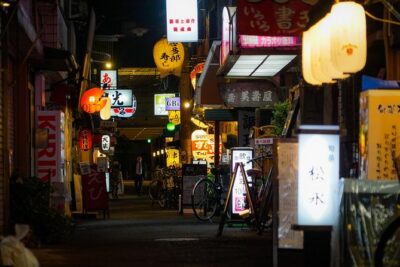
Osaka Bar Hopping Night Walking Tour in Namba (3 bars, 6 tastes)
Read our review →
Creepy Crawl Night-Time Haunted Pub Walking Tour of Savannah’s Historic District
Read our review →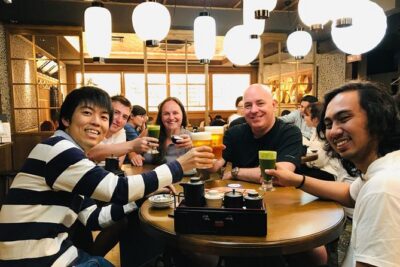
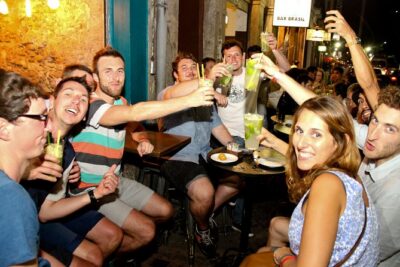
More than a Pub Crawl: An Authentic Night Experience in Rio
Read our review →
Seeking Spirits Haunted Night-Time Pub Crawl in Nashville
Read our review →

More than a Pub Crawl: An Authentic Night Experience in Rio
Read our review →Browse the lists this crawl appears in