
Review · JAPAN
Kyoto: Food and Drink Bar Hopping Tour with Local Guide
Kyoto eats well after dark. This local-led bar hopping tour is appealing because it pairs small local restaurants with a guide who can shape the evening around your interests. I like the chance to sample several Japanese foods in one outing, and I like that guides such as Maki, Mark, and Shiyo add personal touches rather than simply escorting you from place to place. The main catch is financial: food and drinks are extra, and you also cover the guide’s food and drinks.
This is not a fixed tasting menu with every cost settled in advance. It is closer to a friendly night out with someone who knows Kyoto’s food districts. You may visit places serving tempura, yakitori, tofu, radish dishes, sushi, gyoza, regional specialties, or Japanese-style Western food. That freedom is useful, but your final bill depends on what you order and how many stops you make.
Key points at a glance
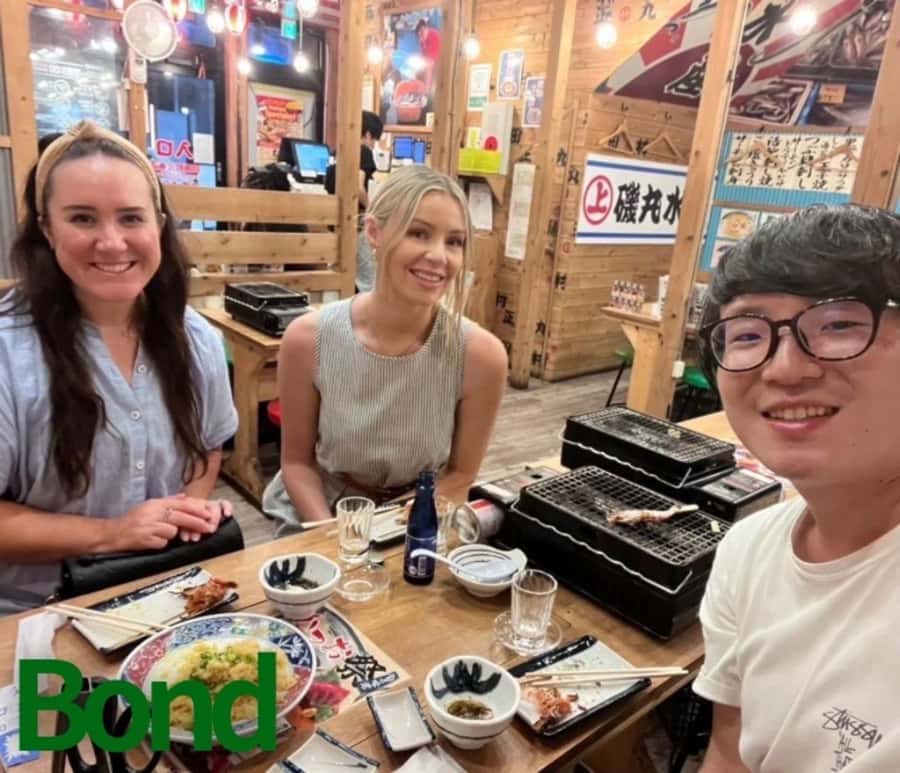
- Three different restaurant styles are possible: One outing with Maki included tempura, yakitori, and tofu and radish dishes, giving diners a broad taste of Kyoto in one evening.
- Your food interests help shape the route: Tell the guide what you want to try, and they can look for suitable places rather than forcing everyone into one set menu.
- The guide’s bill is shared: The $44 price covers the guiding experience, not food or drinks, and you also pay for the guide’s food and drinks.
- Personal guiding is the strongest feature: Mark met one party at its hotel, while Shiyo added stories about Kyoto and took the group to a local cocktail bar.
- Dietary needs can be discussed in advance: The guide can look for food that suits allergies or foods you cannot eat, but advance notice matters.
- The route can include more than dinner: Mark’s evening included a lighting show at Nijo Castle and photographs afterward, showing how much the night may depend on the guide and date.
Why this Kyoto food tour works
Kyoto can be hard to read at night. A restaurant may have a small entrance, a menu with limited English, or a style of dining you have never tried before. A local guide removes some of that guesswork and gives you a reason to step inside places you might pass by on your own.
The appeal here is variety. You are not committed to one type of meal. You might start with tempura, move on to yakitori, and finish with tofu dishes or a drink at a cocktail bar. That makes the tour especially useful early in your Kyoto stay, when you want to learn what you like before choosing restaurants for later nights.
I also like the social shape of the evening. Bar hopping gives you a chance to talk with the guide and other members of your party instead of sitting through a long formal meal. The mood should feel relaxed rather than rushed, though the exact pace is not specified and can depend on the group, the guide, and the selected restaurants.
The experience is priced at $44 per person, which is a reasonable guiding fee if you value local help and food context. It is not a bargain meal, because your actual dining costs come later. Think of the price as paying for access, conversation, recommendations, and route planning. Bring enough cash for your own meal, your drinks, and the guide’s share.
More Bar Hopping Tours in Japan
- Tokyo Bar Hopping Tour in Shinjuku (All-You-Can-Drink + Dinner)
★ 5.0 · 3,587 reviews - Shibuya Meltdown Nightlife Tour: All-You-Can-Drink Bar Hopping
★ 5.0 · 1,058 reviews - Osaka Bar Hopping Night Walking Tour in Namba (3 bars, 6 tastes)
★ 5.0 · 958 reviews
Meeting your guide across from the Disney store
The stated meeting point is in front of a large brown building across the road from the Disney store. This is specific enough to find, but it is not a landmark you should treat casually. I would allow extra time to identify the building and contact the guide if you are unsure.
The tour ends back at the same meeting point. That is useful if you want a known finish, but it also means you should not plan a separate late-night activity at the opposite end of Kyoto unless you have allowed time to return.
Guides speak English and Japanese. The quality of the evening will depend in part on who leads it, and the available examples are encouraging. Mark messaged one party the day before and met them at their hotel instead of having them walk to the advertised starting point. That was a personal adjustment, not something I would assume is included for every booking, but it shows the kind of flexibility that may be possible.
Bring your passport or ID card and cash. Pets are not allowed. The booking information does not give a tour duration, group size, or fixed transport plan, so you should avoid treating this as a precisely timed itinerary.
The first restaurant: choosing the right start
The opening stop sets the tone. Your guide may ask what you want to eat, what you have already tried in Japan, and what you want to avoid. That conversation matters because Japanese cuisine covers far more than the familiar trio of sushi, tempura, and ramen.
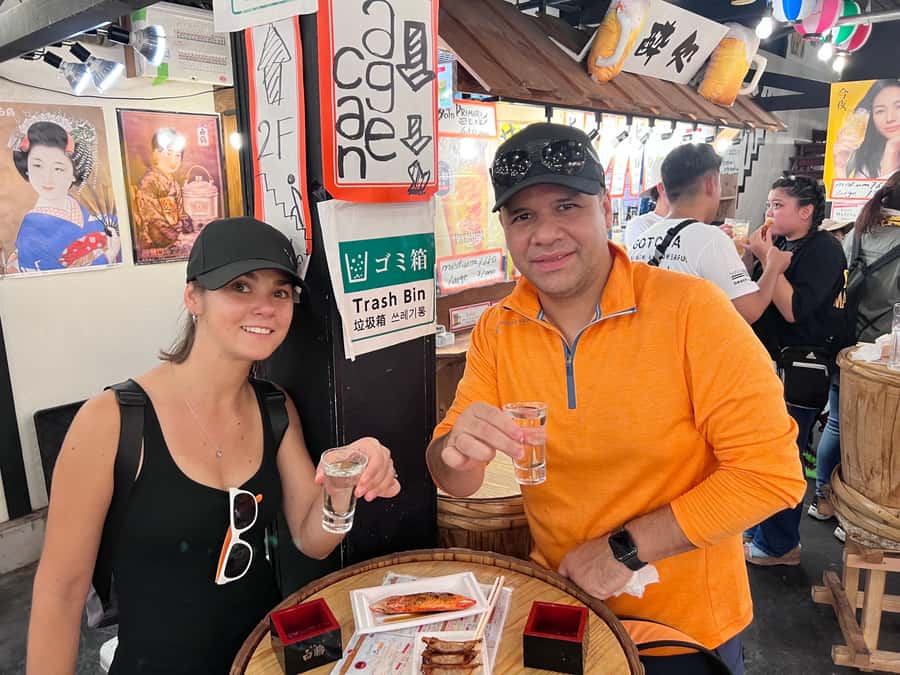
If you want classic food, you can request sushi, tempura, yakitori, or gyoza. If you prefer regional specialties or something less familiar, say so clearly. One guide, Shiyo, took a group to places serving regional dishes before continuing to a local cocktail bar. That kind of route is more useful than a generic list of famous foods because it connects each dish with the setting where people actually order it.
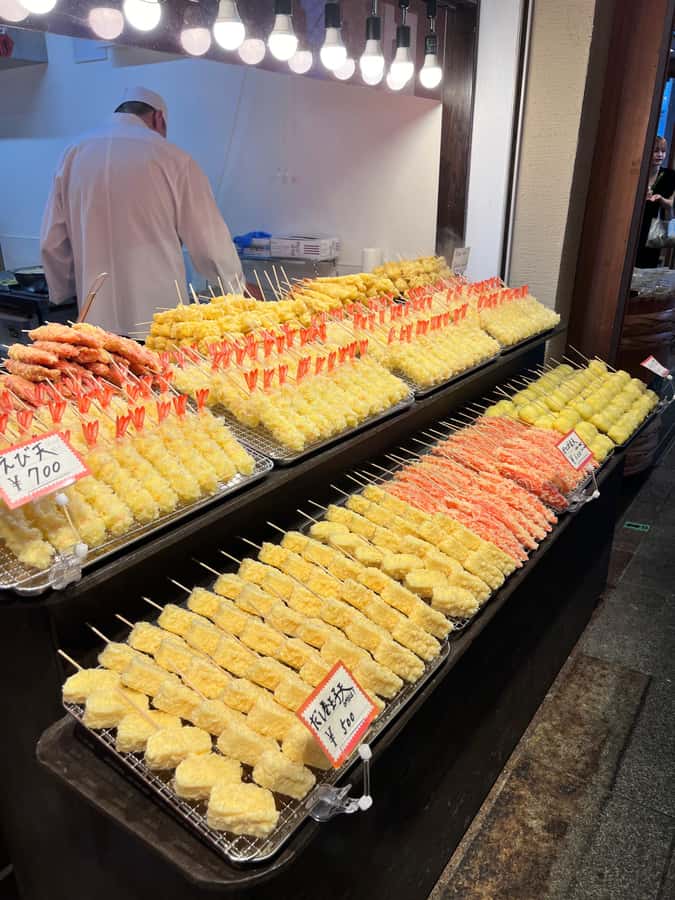
Maki’s route included a tempura restaurant as one of three different stops. Tempura is a good first lesson in Japanese dining because the appeal is not only the fried coating. The ingredients, texture, and dipping style all matter, and a guide can explain what you are eating and how it fits into Japanese food culture.
The drawback is that the first stop is not guaranteed to be a specific restaurant. If you have your heart set on one famous venue, this may frustrate you. The tour is built around local choice, not a published restaurant lineup.
Yakitori and the fun of smaller dishes
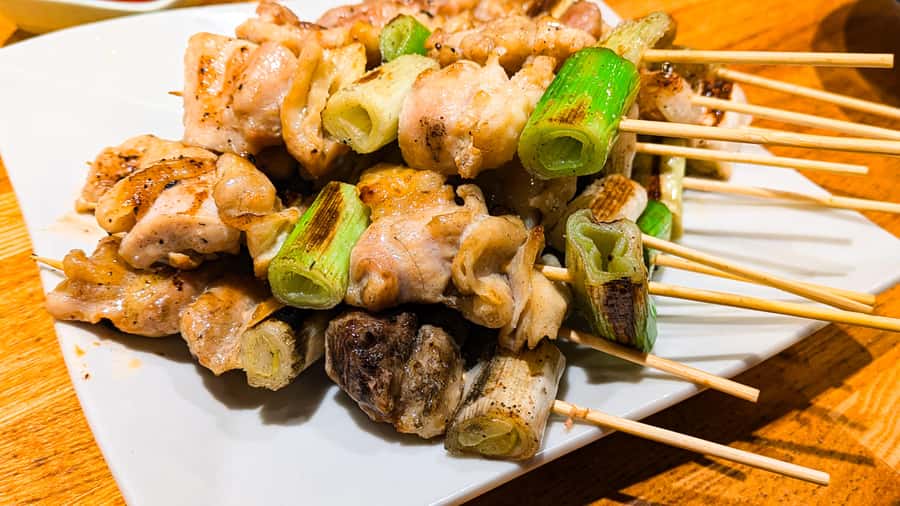
Yakitori gives the evening a different feel. These grilled skewers are well suited to a hopping tour because you can order a few kinds, share them, and still have room for the next stop. If you are cautious about unfamiliar food, a guide can help you choose. If you want to be adventurous, you can ask for recommendations rather than ordering only the items you already know.
The route with Maki moved from tempura to yakitori, then to tofu and radish dishes. That progression shows the value of several smaller stops: you get contrast instead of one large plate with a single flavor and texture.
I would ask before ordering if you have strict dietary limits. The guide can look for food that suits allergies or foods you cannot eat, but the information does not promise that every restaurant can accommodate every request. Tell the guide in advance, not only after you sit down.
Yakitori can also be a good moment to ask about Japanese food customs. Your guide may explain how to order, what sauces or seasonings are used, and which parts of the dish are common in Japan. The tour is not only about filling up. It gives you a setting for questions that might not come naturally during an independent dinner.
More Food and Drink Crawls in Japan
- Tokyo: Shinjuku Bar Hopping with All-You-Can-Drink & Dinner
★ 4.9 · 440 reviews - Hiroshima Izakaya Food and Drink Night Tour
★ 5.0 · 297 reviews - Sapporo Bar Hopping Food Tour
★ 5.0 · 232 reviews - Tokyo: Shinjuku Food Tour Highlights (Best Eats)
★ 5.0 · 100 reviews
Tofu, radish, and Japanese food beyond the obvious
The tofu and radish stop is a reminder that Kyoto’s food culture is not limited to raw fish and fried food. Mild ingredients can be prepared in ways that make texture and seasonings important. If you want a broader sense of Japanese cooking, this kind of stop may be more revealing than another familiar dish.
You can also ask about yoshoku, or Japanese-style Western food. The experience specifically points to this less obvious part of the country’s food culture. That might appeal to you if you want to understand how Japan adapts outside influences into local cooking rather than simply checking off standard dishes.
I appreciate this wider scope. Many food tours repeat the same well-known items because they are easy to explain. Here, the guide can respond to curiosity. You might still eat sushi, but you have a better chance of learning how Kyoto’s everyday food scene reaches beyond the dishes most often served abroad.
The practical limit is appetite. Because food and drinks are purchased separately, you control how much you order. That helps if you prefer to sample rather than eat a large meal, but it also means you need to keep track of spending throughout the night.
A local cocktail bar and Kyoto after dark
Shiyo’s route included a local cocktail bar after stops for regional food. This adds a change of pace and gives you a chance to talk about Kyoto’s drinking culture, not just its cooking.
The tour description emphasizes nightlife, but it does not promise a particular bar. That is important. You should book this for a guided night of food and drink, not for guaranteed access to a famous venue or a specific style of nightlife.
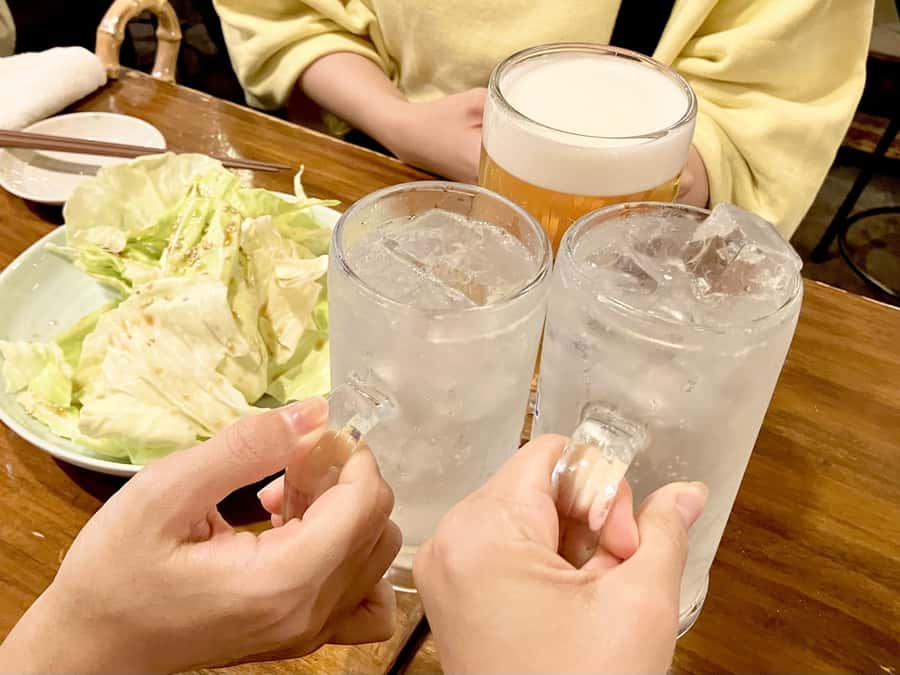
The atmosphere is likely to suit you if you enjoy conversation and trying several places. It may not suit you if you want a quiet, private dinner or a tightly controlled schedule. You should also remember that the guide’s drink is part of the cost you cover, so a cocktail stop affects the group’s total bill.
Cash is essential. Even if some venues accept cards, the instructions specifically tell you to bring cash, and the experience does not include food or drinks.
When the evening becomes more than a food tour
Mark’s outing shows how personal this experience can become. The group ate a set meal at an authentic Japanese restaurant, then went to a summer event at Nijo Castle with a lighting show. Mark kept the group entertained, walked them back to their hotel, and later sent photographs from the evening.
I would not treat the castle event, hotel pickup, hotel return, or photographs as standard inclusions. They are best understood as examples of what a flexible local guide may add when timing and local events allow.
Still, this is a valuable clue about the tour’s character. You are not only paying for a list of dishes. You may gain a local companion who knows what is happening that night and can adjust the plan. If a festival or cultural event is available, ask the guide if it can fit the route, but do not assume it will.
This flexibility can be a real strength for repeat visitors to Kyoto. You may already have seen the major temples and want an evening that feels less programmed. It can also help first-time visitors who want a friendly introduction before exploring restaurants alone.
How much value do you get for $44?
At $44 per person, the tour makes sense if you would otherwise spend time choosing restaurants, decoding menus, and wondering which places are genuinely local. The guide’s recommendations and conversation are the main product.
The price does not cover dinner. You pay for every dish and drink, plus the guide’s food and drinks. A group that visits several restaurants and orders freely could spend much more than the advertised price. Ask yourself how much you want to eat before booking, and set a spending limit if your budget is tight.
The value is strongest when you use the guide well. Tell the guide your favorite foods, your allergies, your comfort level with unfamiliar dishes, and whether you prefer a meal, small plates, drinks, or a mix. A vague request may produce a pleasant evening, but a clear request gives the guide more to work with.
The rating is 4.6 from eight reviews, and the most praised elements are consistent: relaxed pacing, different restaurant styles, good local food, and guides who make the evening personal. Maki, Mark, and Shiyo are each described in ways that point to the same advantage, a human guide who does more than lead the way.
Who should book this experience?
I would choose this tour if you want a social introduction to Kyoto food and do not need a fixed menu. It suits curious eaters, couples, solo visitors who want company, and small groups that enjoy sharing dishes and asking questions.
It is also a good choice for anyone nervous about entering small Japanese restaurants alone. The guide can help you decide what to order and explain food traditions as you go.
I would hesitate if you need a firm total price. Since the food, drinks, and guide’s expenses are extra, the advertised fee is only part of the night’s cost. I would also think twice if you need a guaranteed vegetarian, allergy-safe, or alcohol-free route, though you can discuss dietary needs in advance and the guide can look for suitable choices.
Last-minute booking may be canceled, so do not leave this until the final moment if the evening matters to your plans. You can reserve now and pay later, and cancellation is allowed up to 24 hours in advance for a full refund.
Should you book the Kyoto food and drink tour?
Book it if you want a flexible night with local guidance, several types of Japanese food, and the chance to see where Kyoto’s residents eat and drink. The strongest reason to go is the guide, especially if you value stories, recommendations, and a route shaped around your tastes.
Skip it if you want an all-inclusive food package or a guaranteed restaurant list. For everyone else, the $44 fee is fair as long as you budget separately for the evening itself. Bring cash, share your food preferences early, and let the guide take you beyond the obvious sushi stop.
FAQ
What is included in the Kyoto food and drink tour?
The tour includes a local guide and the opportunity to learn about Japanese food culture.
Are food and drinks included in the price?
No. You pay separately for all food and drinks, including the guide’s food and drinks.
How much does the experience cost?
The listed price is $44 per person.
Where does the tour start?
Meet your guide in front of a big brown building across the road from the Disney store.
Where does the tour finish?
The activity ends back at the meeting point.
Which languages are available?
The tour is available in English and Japanese.
Can I tell the guide about allergies or foods I cannot eat?
Yes. You can tell the guide in advance, and the guide can look for food that suits your dietary needs.
What should I bring, and are pets allowed?
Bring your passport or ID card and cash. Pets are not allowed.
More Food Tours in Japan
- Private Food & Sake Tour in Central Kyoto with Sake Sommelier
★ 5.0 · 24 reviews - Private Tokyo Local Food and Drink Tour with a Bar Hopping Master
★ 5.0 · 22 reviews - Shinjuku Underground Nightlife Tour: Izakaya Food & Bar Hopping
★ 5.0 · 11 reviews - Shibuya: Local Food & Culture Walk in Sangenjaya District
★ 5.0 · 5 reviews
More Food and Drink Tours in Japan
- Osaka Authentic Local Izakaya Hopping Experience: Food & Drinks
★ 5.0 · 99 reviews - Hiroshima: Bar Hopping Food Tour
★ 4.9 · 48 reviews - Osaka Night Walk : Discover Umeda Food and Pub
★ 5.0 · 34 reviews - 3.5h Osaka Night guided Local Bar Hopping, Sake & Karaoke
★ 5.0 · 27 reviews
Just added around Japan
- Private Yokohama Noge Food & Bar Tour – Local Night Experience★ 5.0 · 4 reviews
- Tokyo Shinjuku Bar Hopping –Wagyu , Ramen & 7 Dishes★ 5.0 · 13 reviews
- Shinjuku Underground Nightlife Tour: Izakaya Food & Bar Hopping★ 5.0 · 11 reviews
- Private Tokyo Local Food and Drink Tour with a Bar Hopping Master★ 5.0 · 22 reviews
- Akabane pub adventure night★ 5.0 · 5 reviews
- Tokyo Shinjuku Japanese Local Bar Hopping and Food Tour★ 5.0 · 4 reviews
- Shibuya: Local Food & Culture Walk in Sangenjaya District★ 5.0 · 5 reviews
- 【Contemporary Culture】Bar Hopping I Always Visit in Shinjuku!★ 5.0 · 29 reviews
Food and Drink Crawls, compared.
Tokyo Bar Hopping Tour in Shinjuku (All-You-Can-Drink + Dinner)
Read our review →
Shinjuku Bar Hopping with All-You-Can-Drink & Dinner
Read our review →
Small-Group Local Pubs Walking Tour And Traditional Czech Dinner
Read our review →
Barcelona speakeasy tapas pub crawl with hidden bars
Read our review →
Browse the lists this crawl appears in